
Don’t be idle in the bull market, take this complete guide to stablecoin investment


Original title: "Don't be idle in the bull market! A complete guide to stablecoin financial management"
Original source: Biteye
After making a profit from speculating in cryptocurrencies in the bull market, in addition to continuing to trade snowballs, stablecoins can also become a great tool for capital appreciation. The returns from stablecoin financial management in a bull market will be much higher than in a bear market, and can even reach more than 40%.
This article will discuss in detail how to increase passive income through stablecoins during the bull market, helping everyone to steadily increase value when the market rises!
First of all, the channels for stablecoin financial management are mainly on-chain or exchanges.
If you want stable happiness (about 10% apy), you can use it as you want, and choose centralized exchanges for financial management directly;
If you are proficient in on-chain lending and deposits, you can get more income (about 10%-30% apy);
If you pursue more than 40% apy, you need to have a deep understanding of the protocol mechanisms such as pendle and usual.
1. On-chain stablecoin financial management
1. @pendle_fi
Features:The core concept of Pendle is to tokenize future income. Users can split and trade future income rights to obtain liquidity and increase the return on investment.
In simple terms, the assets held (including stablecoins) are divided into two parts: Ownership Token (OT) and Yield Token (YT), and these two parts are traded independently. For example, users can split sUSDe through the Pendle platform, deposit it into Pendle YT, and obtain PT (yield token). After maturity, PT can be exchanged back to sUSDe at a ratio of 1:1, with an annualized yield of approximately 28.19%. If you choose to perform similar operations on USD0++, the annualized yield can reach 25.32%.
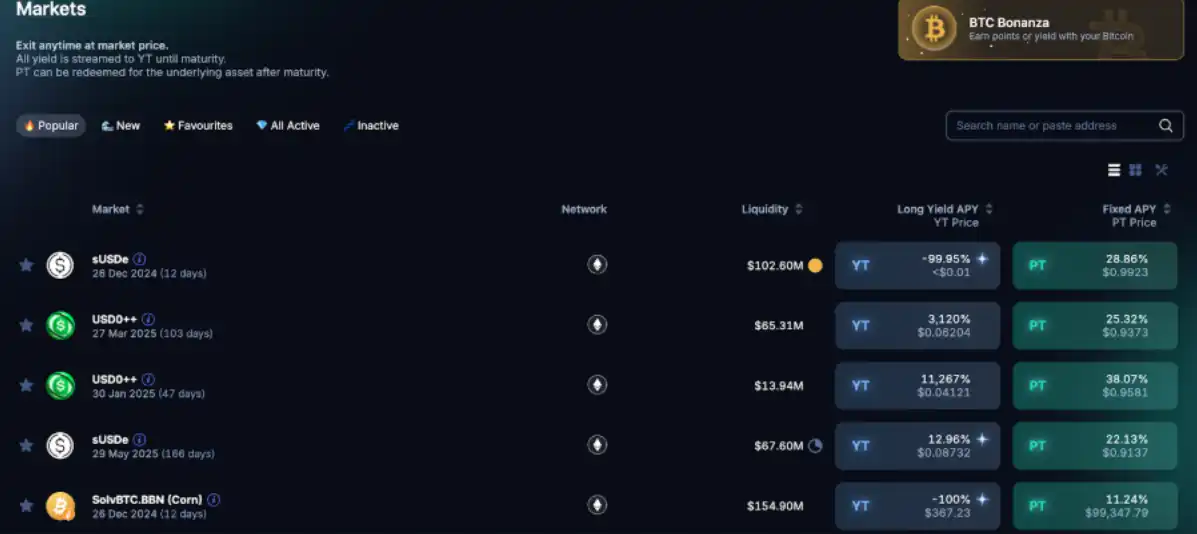
Annualized yield:The annualized return rate of the LP pool provided by Pendle is sometimes as high as 40%-60%, and through different liquidity pools, you can also choose products with different risk levels for investment. The LP pool of usd0++ has launched a new interest rate range version this week. The new version allows for a higher underlying APY, and the overall LP APY ceiling is higher.
Applicable to: High-risk users, especially those interested in liquidity and future income rights split.
Link:
https://app.pendle.finance/trade/pools
https://app.pendle.finance/trade/markets?utm_source=landing&utm_medium=landing
2. @usualmoney
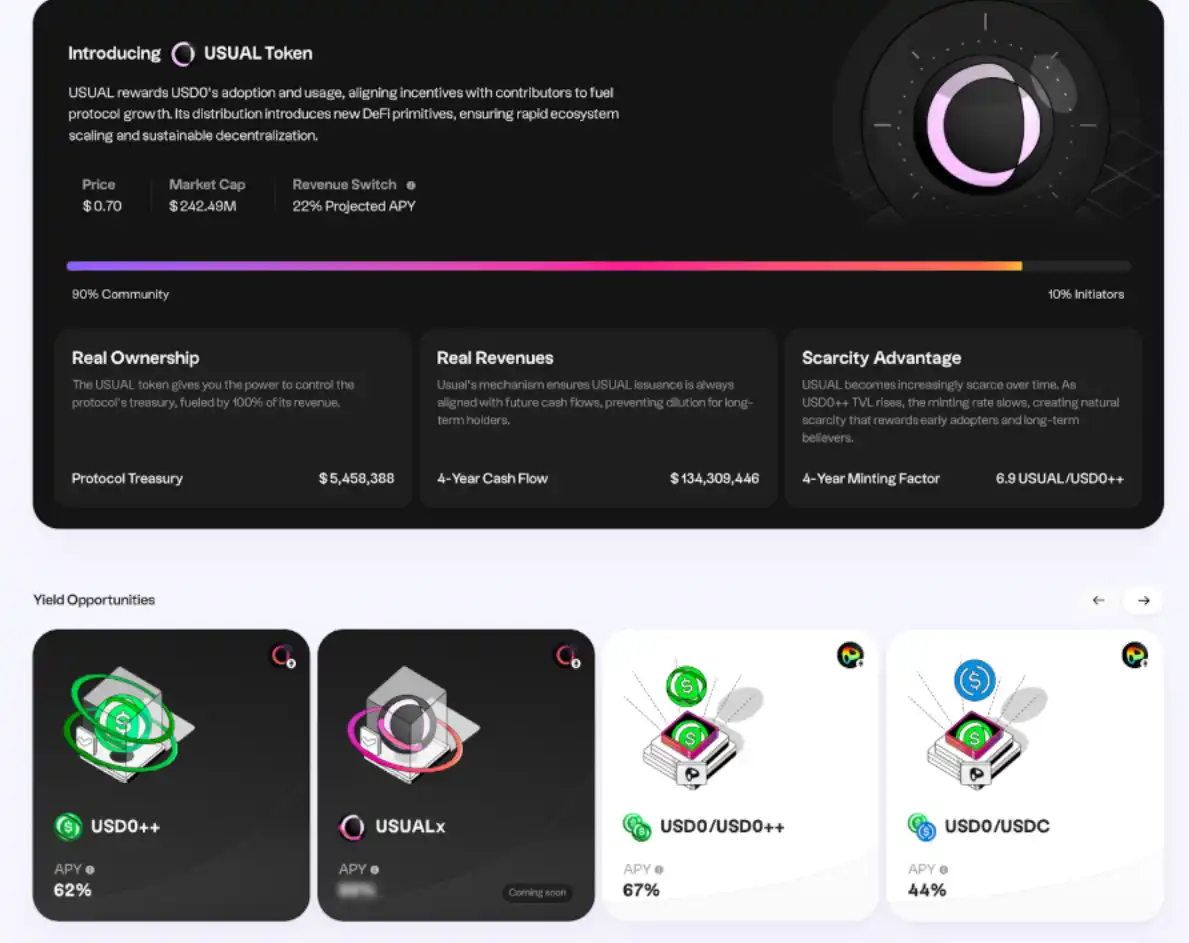
Features: Automatically manage user funds through smart contracts, while utilizing the combination of liquidity pools and lending protocols.
Annualized rate of return: 40%-70%, depending on market conditions, the return is relatively volatile, but in the long run, the return is relatively stable.
Applicable to:Suitable for high-risk users who are willing to bear certain fluctuations.
Link: https://app.usual.money/
3. @bounce_bit
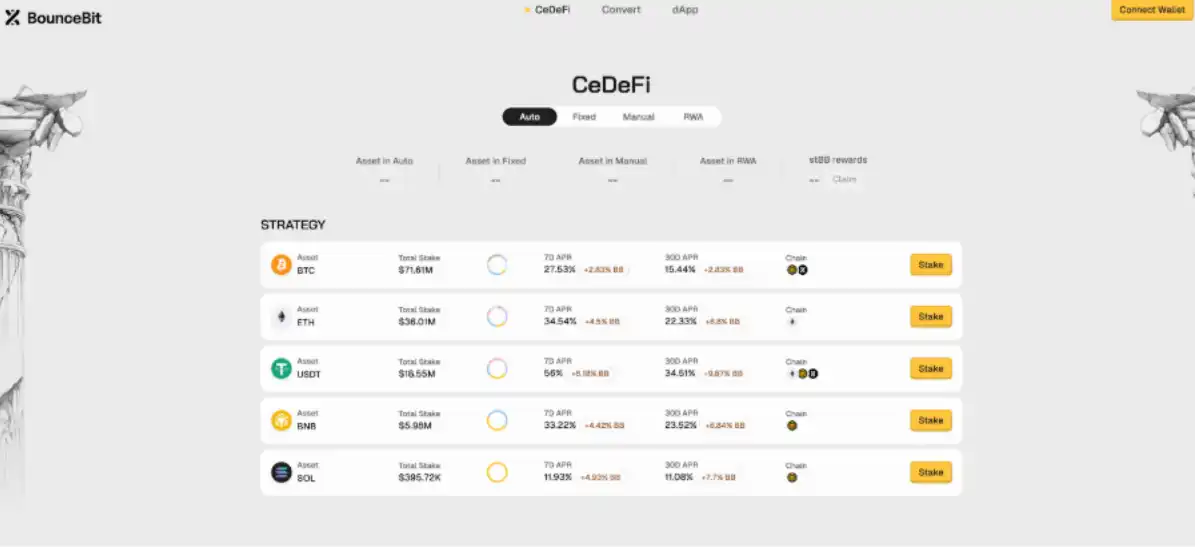
Features:BounceBit is a Bitcoin restaking infrastructure project that enhances the liquidity and practicality of Bitcoin by combining centralized finance (CeFi) and decentralized finance (DeFi).
Annualized rate of return:USDT 30-day annualized rate of return is 34.5%, and 7-day annualized rate of return is 56%. These rates of return are already very impressive without $BB rewards. If the rewards provided by the platform are added, the actual rate of return may be even higher.
Suitable for: Active traders who want to get high returns in the short term, especially those who are willing to take some risks.
Link: https://portal.bouncebit.io/cedefi
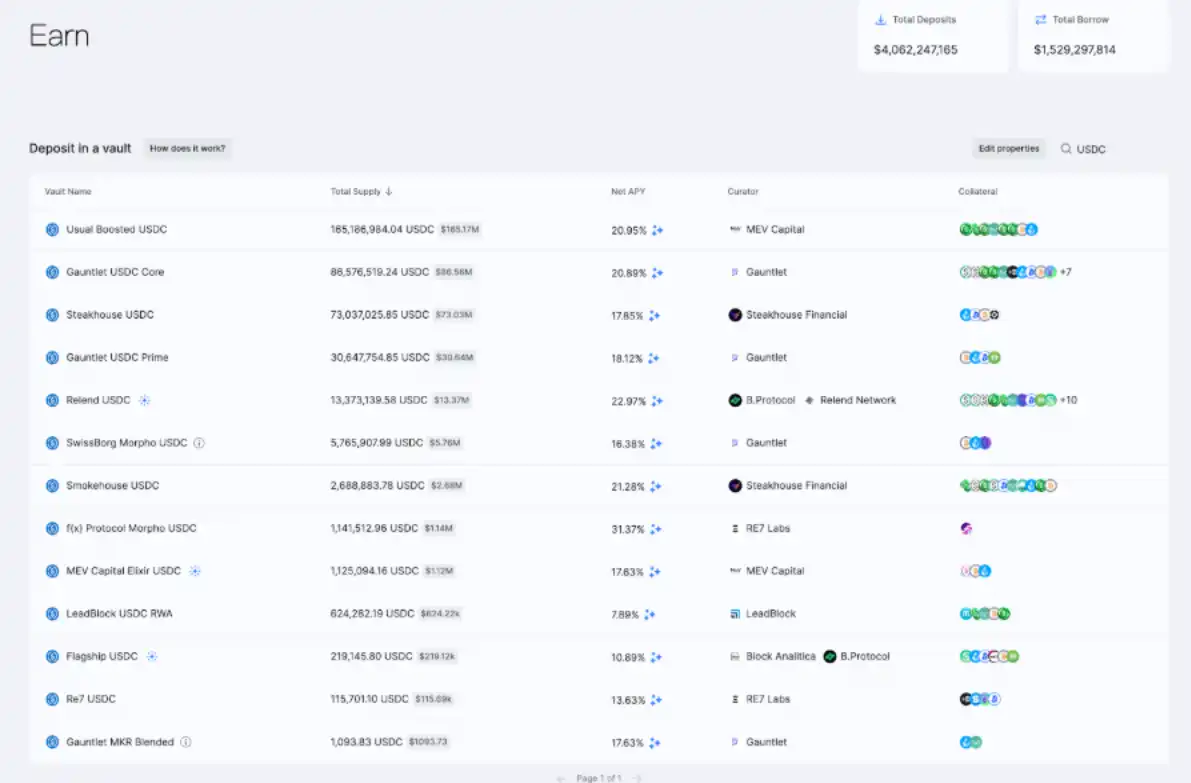
4. @MorphoLabs
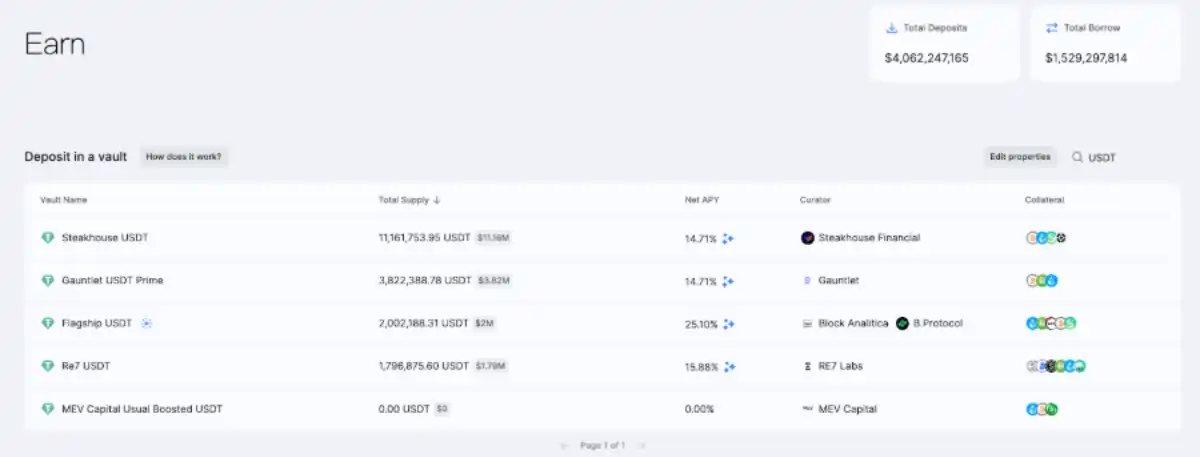
Features:Morpho Labs' core advantage is that it reduces the market's borrowing costs and provides stable returns for depositors through the merger of multiple decentralized lending protocols.
Annualized rate of return:Between 10%-30%, depending on platform liquidity and market demand.
Applicable to:It is suitable for users who have a certain understanding of the lending market, especially those who are looking for stable and relatively safe returns.
Link: https://app.morpho.org/?network=mainnet
5. @solayer_labs
Features:Solayer focuses on combining USDC with the Solana chain. By depositing USDC into Solayer, users can not only enjoy stable returns, but also participate in other high-yield projects in the Solana ecosystem, killing two birds with one stone.
Annualized rate of return:Currently, the stablecoin yield is around 5%, and it is expected to increase further in the future as the platform develops.
Applicable to:Users who are interested in the Solana ecosystem.
Link: https://app.solayer.org/dashboard
6. @AriesMarkets
Features: No leverage, the exchange already supports U deposits and withdrawals, can interact with projects, and may also have secondary apt airdrops.
Annualized rate of return: Apt USDT 16%
Applicable to: Users who prefer to eat multiple fish and relatively stable returns
Link: https://app.ariesmarkets.xyz/lending
2. Centralized exchange financial management
1. Binance
Binance USDT and USDC fixed or current financial products are suitable for users with different needs. The annualized rate of return is stable at around 10%, and can reach 16% during some high-yield periods.
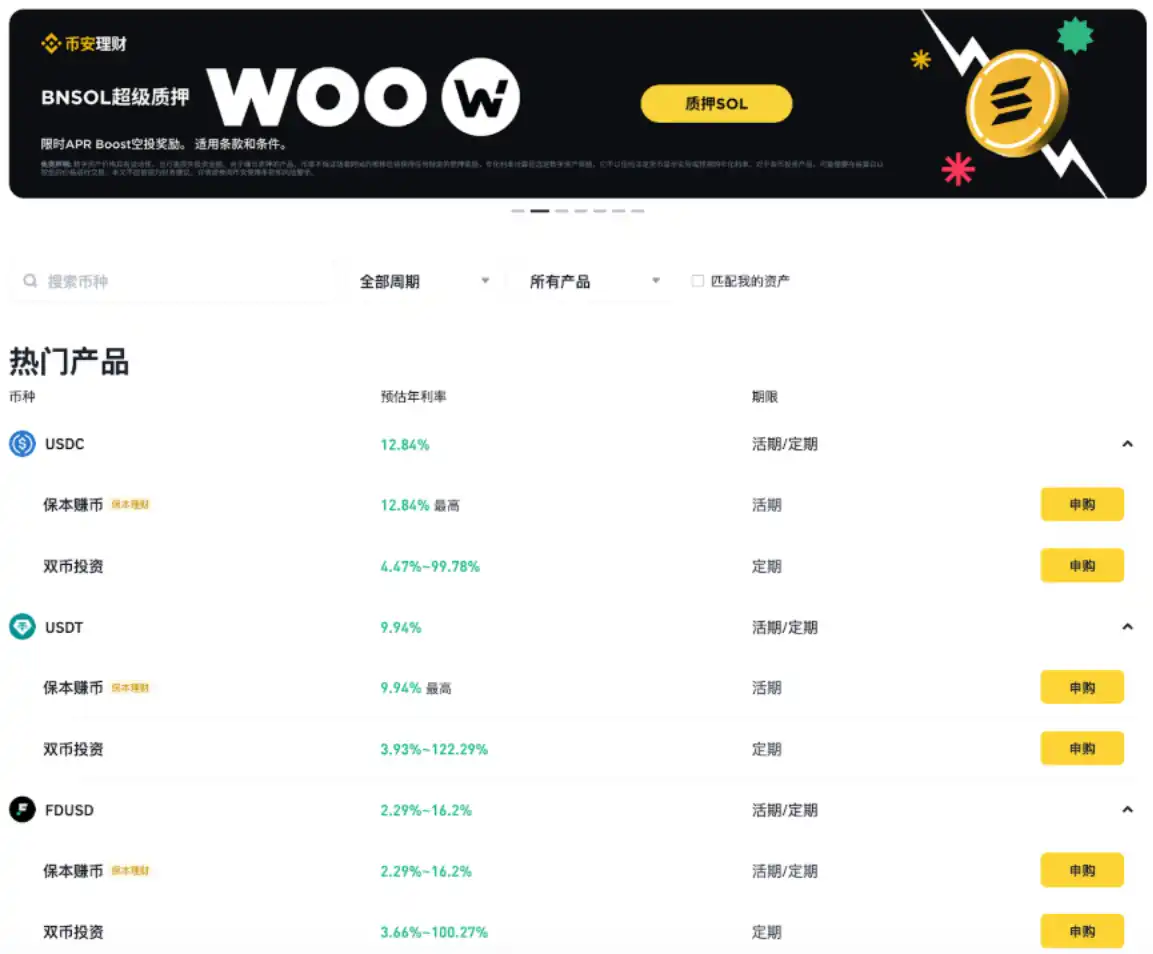
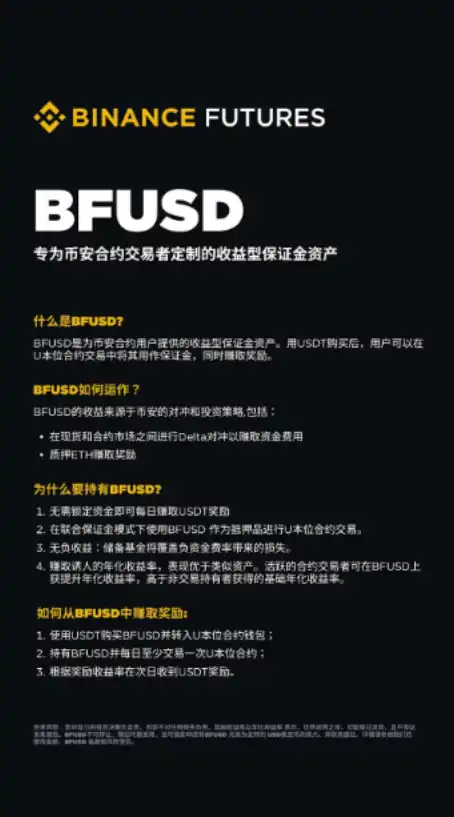
In addition, Binance's newly launched $BFUSD stablecoin product is quite interesting. It is mainly designed for contract users, which can not only provide financial support for contract margin, but also bring stable income to users.
The main source of $BFUSD income comes from funding rate and ETH pledge. In the case of negative funding rate, Binance has set up a reserve fund to ensure that users will not face losses. The more flexible it is, the more users can adjust their income according to the frequency of transactions, and the income is settled on a daily basis. The more frequent the transaction, the higher the income.
2. OKX
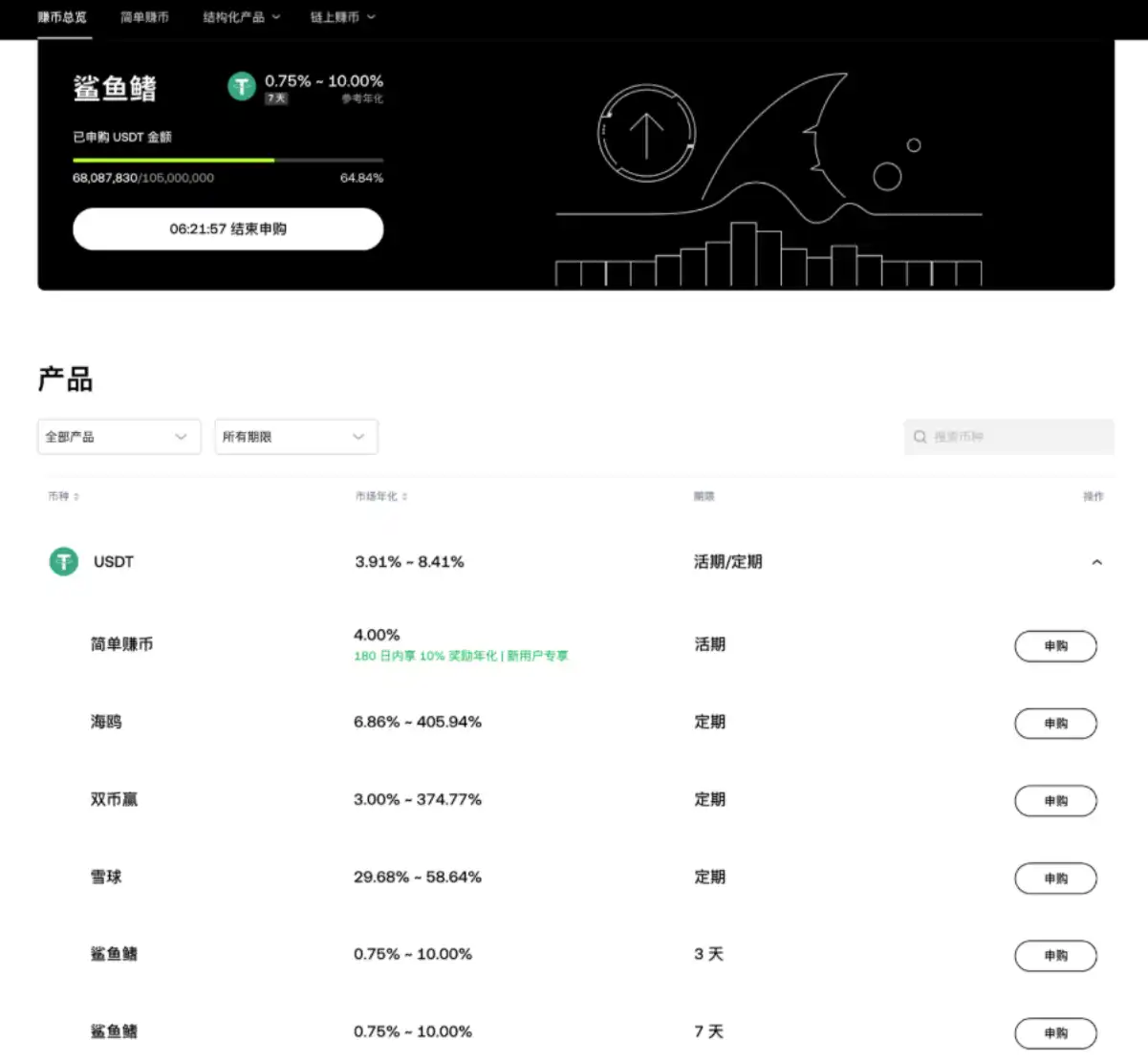
OKX provides a variety of stablecoin financial management options. The annualized return of USDT for 7 days is up to 10%. You can choose the right product according to your risk preference and redeem it at any time, which is suitable for short-term financial management needs.
3. Bybit
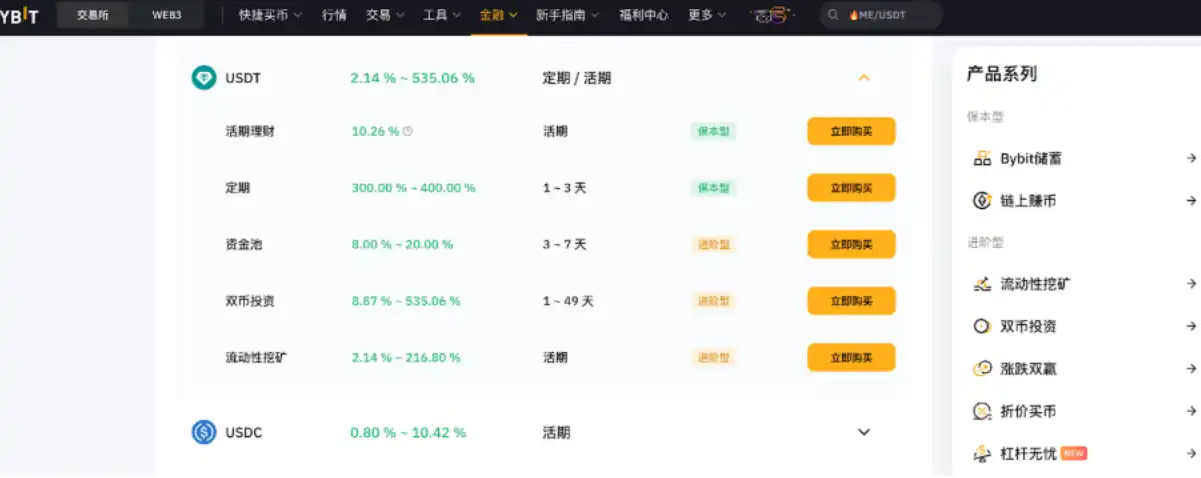
Bybit also has a wide range of financial products, including multiple stablecoin products including USDT and USDC, including principal-guaranteed and advanced types. Among them, the principal-guaranteed current deposit interest rate is also 10%.
4. Bitget
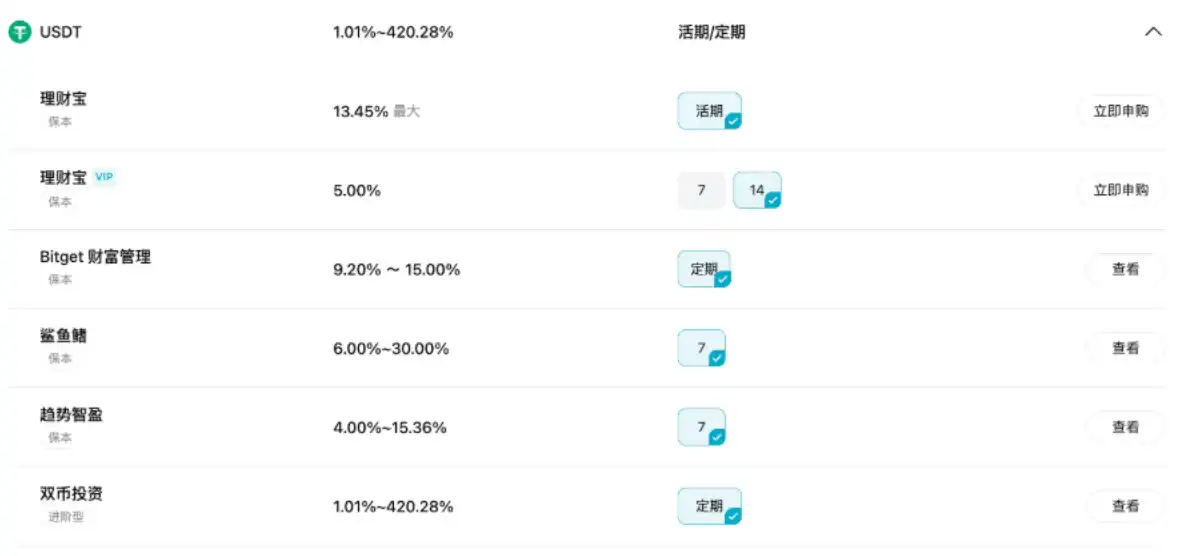
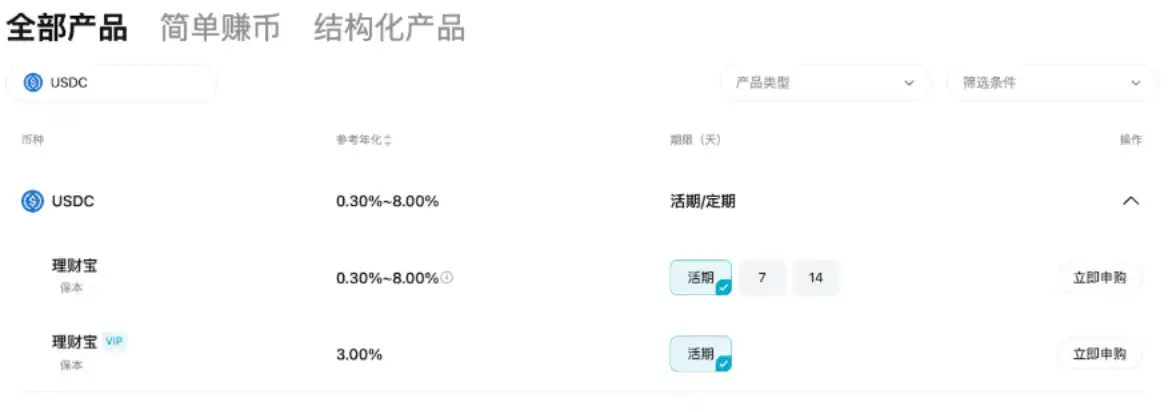
Bitget provides a variety of financial products, including flexible "Wealth Management" current/short-term financial management, stable "Wealth Management" regular/long-term products (annualized returns 9.2%-15%, currently about 13%) and high-yield "Dual Currency Financial Management". You can choose the right product based on your risk tolerance and funding needs.
III. Summary
On-chain financial management is suitable for users who are familiar with on-chain operations, providing higher returns, but with greater risks. Centralized exchange financial management is more suitable for novice users, with simple operation and stable returns, but relatively low yields.
Whether you are a risk-taker pursuing high returns or a conservative who hopes to obtain steady returns, you can find stable currency financial management products suitable for you on these platforms.
The most important thing is to make choices based on your needs and risk preferences, and flexibly adjust your investment strategy!
Risk warning: The above is only for information sharing, not investment advice.
This article is from a contribution and does not represent the views of BlockBeats.
You may also like

Exclusive Interview with Strategy CEO: Putting Aside the Sale of 32 BTC, the 60 Trillion AI Intelligence is the Ultimate Fate of Bitcoin

Morning Report | The South Korean Financial Services Commission plans to expand the regulatory sandbox to include virtual assets; the parent company of the New York Stock Exchange, ICE, has reached a partnership with OKX to jointly establish a cryptocu...

Morning Report | Secret Network loses $4.67 million due to cross-chain vulnerability; Michael Saylor releases Bitcoin Tracker information again, may disclose increased holdings data next week

Kalshi's biggest competitor is not Polymarket

The second half of the computing power battle: Intel CEO Pat Gelsinger reveals how AI is reshaping the global semiconductor supply chain
B.AI partners with MiniMax to launch a limited-time free experience of M3, enabling zero-threshold implementation of Agentic productivity through full-stack infrastructure
A company that was on the verge of bankruptcy has just surpassed Bitcoin in market value

The two giants are racing in "credit": loan balances of 9.9 billion vs 14.6 billion USD, Brazil has become the main battlefield

Rented Belief: How Much of the Bitcoin ETF Fund Flow is Real Money

On-chain finance: On-chain IPOs and on-chain ICOs, a new frontier in the trillion-dollar market

WEEX Live mode: Monitor 20 trading pairs at once and trade like a pro

WEEX Makes Affiliate Access Easier on the Web and in the App

Customize Your Spot Trading Page: Drag Modules and Move the Order Panel Where You Want It

Perp DEX: The Next Generation Exchange "War"

10 Counterintuitive Insights on Latin American Payments

The AI gamble of mining companies: Valuations enter a phase of differentiation, and it's hard to turn the tide
A letter from Alliance to entrepreneurs: Written on the occasion of Cursor selling for 60 billion dollars
Stablecoins Finally Find Real Returns: On-Chain Reinsurance Re Explained | Interview with Re Founder Karan Saroya
Exclusive Interview with Strategy CEO: Putting Aside the Sale of 32 BTC, the 60 Trillion AI Intelligence is the Ultimate Fate of Bitcoin
Morning Report | The South Korean Financial Services Commission plans to expand the regulatory sandbox to include virtual assets; the parent company of the New York Stock Exchange, ICE, has reached a partnership with OKX to jointly establish a cryptocu...
Morning Report | Secret Network loses $4.67 million due to cross-chain vulnerability; Michael Saylor releases Bitcoin Tracker information again, may disclose increased holdings data next week
Kalshi's biggest competitor is not Polymarket
The second half of the computing power battle: Intel CEO Pat Gelsinger reveals how AI is reshaping the global semiconductor supply chain
B.AI partners with MiniMax to launch a limited-time free experience of M3, enabling zero-threshold implementation of Agentic productivity through full-stack infrastructure


