
IOSG Founder: Please tell Vitalik the truth, let the OGs who have enjoyed the industry's dividends enlighten the young people

 Prefer us on Google


Author: Jocy@IOSGVC
After meeting with an OG today, these four sentences jumped out at me, echoing the voices of countless practitioners still active on the front lines of Web3. I am reposting a tweet I wrote over a year ago as a whistleblower for the industry. Although the prediction turned out to be correct, it is not the outcome any practitioner wanted. No one anticipated this would happen. But it is happening. No one is willing to speak up. So I dare to speak out.
Introduction
This week in Shanghai, I attended MuShanghai organized by Sun at Hongqiao. A month-long event divided into four themed weeks—biotech, AI, culture, and robotics. Over 2,000 people registered globally, and ultimately more than 800 were selected to attend, including Stanford entrepreneurs, former OpenAI engineers, YC, HF0, and Jacob from Frontier Tower.
Sun, Sunny, and a group of twenty volunteers accomplished something that perhaps only they could do in all of China—navigating visas, international networks, and government relations to create a true global gateway.
For this alone, every person in the industry should applaud them. This is the most successful team transitioning from the crypto community to a diversified community. However, after going through a few rounds, my feelings are complex. Nearly half of the attendees have a crypto background.
The new labels they wear are biotech founder, AI agent builder, robotics entrepreneur, cultural curator. Some are genuinely exploring the next journey, while others are preparing to leave crypto with dignity. This is a great self-rescue effort unfolding among people in this industry—in a way I have never seen before.
Main Text
1/ I am more pessimistic than ever in these two years, but also more unwilling to give up than ever
I have met many people recently and heard many things. The problems in this industry are no longer just bear market issues; the positive feedback mechanism of the entire ecosystem is broken. I have organized these scattered observations, conversations, and reflections. This is not a complaint; it is a hope for more people to shoulder this together.
2/ "Low-probability bad events" are happening in bulk
I have been reading probability theory recently. We veterans are used to understanding the market through cycles—there was an alt season in the last cycle, and there will be one in this cycle too. But this year, all the previously underestimated low-probability events are happening simultaneously: 50-60% of China's major Web3 developers have shifted to AI.
Those who have left are unlikely to return. Thousands of projects have raised billions of dollars, but few have truly broken out. Wall Street, Trump, and sovereign funds have taken Bitcoin away, and the position of native builders is becoming increasingly narrow. American funds are thriving in fundraising, while the Asian ecosystem is facing a survival crisis. Entrepreneurs are bleeding out, exiting the market, and investors are retreating. It’s not that the cycle hasn’t come; it’s that the script for this generation's cycle is completely different from the past.
3/ Regarding Ethereum: I am not pessimistic, but I am worried
The reform of Ethereum has reached a critical point that cannot be delayed. The best time windows in the past—the bull market of 2021 and the turning point of 2022—were the best opportunities for driving application innovation and creating super applications, with the greatest attention, the most money, and the best talent concentrated in that window. But at that time, the focus was placed on technical narratives like ZK and L2.
The technical direction itself is not wrong; the mistake was piling all resources into niche directions at a time when mainstream products should have emerged in the mass market. Now, in a bear market, pushing out a super application is ten times harder than in those two years. The weakness of Ethereum's price is essentially the weakness of the entire Web3. Because Ethereum carries the most capital, the most talent, and the most attention in the industry. Whether it can rise again concerns the future of millions of practitioners.
4/ Vitalik may be living in a huge information cocoon
One strong feeling I have recently is that most people around Vitalik do not dare to directly tell him how difficult the industry is and where the real dilemmas of Ethereum lie. The number of interest-seeking groups is increasing, and the culture of small circles is becoming more severe. When new directions and opportunities emerge, they often extend outward along the ties of the existing circle. Ordinary communities and practitioners find it hard to have the opportunity to communicate and provide feedback to Vitalik.
The dissatisfaction and complaints from the community are filtered layer by layer and kept at bay. This is not the fault of any individual. It is a result of an organization rapidly expanding to over 200 people without a feedback mechanism keeping pace. But the cost of boiling frogs in warm water will ultimately fall on every person still building in this ecosystem.
5/ Practitioners have no positive feedback; society and the next generation seem to not recognize them
This is the most genuine common predicament of this generation of practitioners, transcending geography: In China, the industry is labeled as gray production, often tied to pyramid schemes; in Hong Kong, due to a series of exchange scandals, practitioners are often assumed to be fraudsters; in Singapore, crypto is considered an unworthy industry; in the U.S., compared to AI entrepreneurs, crypto practitioners have almost no social identity.
I heard a practitioner say that his high school child is unwilling to learn about wallet private keys, believing that his father's career is not respectable. Many founders, as parents, dare not mention what they do at school parent meetings. The next generation does not see this as a worthy endeavor. When an industry cannot even say "I am engaged in it," the issue of succession is no longer abstract; it is urgent.
6/ The issue of succession is approaching
Most of the first-generation core developers of Ethereum have formed families and have children. This is a very natural life stage, making it impossible to write code for ten hours a day like ten years ago. But where is the next generation? We have tried: graduate students and PhD candidates from universities, engineers from major Web2 companies, and early community geeks. But in an era so vibrant for AI, what do we have to retain them? When Bitmain and ByteDance were recruiting fresh graduates at the same time, the salaries were similar—ten years later, the equity returns differed by tens of millions.
This generation of young people sees the outcomes of the previous generation; why would they choose crypto over AI? Moreover, we not only need to retain the next generation but also compete directly with AI for talent. Solana, Ethereum, AI labs, and robotics companies are all fishing in the same pool.
The packages offered by leading crypto projects are already hard to compete with. Successors will not grow on their own. It requires systematic cultivation: crypto schools, research grants, developer funds, and long-term mentorship mechanisms. Paradigm, a16z, AllianceDAO, and ResearchHub are doing this. The Chinese community must also have people doing this.
7/ A bit of expectation for Vitalik
I want to express this in an encouraging way because attacking is meaningless. Vitalik is the most influential entrepreneur in this industry. He is not just the chief scientist; he is the beacon for the direction of the industry. During Ethereum's most critical transformation period, he needs to return to the front lines of entrepreneurship. Not the 2014 version of himself, but the one who returns with reflections from these years, back to the original entrepreneurial spirit.
The bear market is the best time to build the next generation of products. He needs to reassemble core developers, the community, and the second generation of young people to move toward the next decade together. He must have people around him who can directly tell him the real situation.
8/ The divergence of OGs between China and the U.S.: the blood-generating capacity of the ecosystem
Last year, I wrote "Don't Let the Casino Devour the Cathedral," comparing these two paths. Today, I must say it again: the financing environment for Chinese entrepreneurial teams is extremely severe. 90% of Asian market-oriented funds are in dire straits. This means that the Asian Web3 ecosystem lacks blood-generating capacity. Once a few top funds cannot hold on, the entire ecosystem will collapse. The differences in choices made by OGs in China and the U.S. after obtaining the industry's first pot of gold are particularly glaring today. Most American OGs are still building—people like Rune, Hayden, and Juan are continuously reinvesting their wealth back into the ecosystem.
Most Chinese OGs, after making money, choose to cash out, with some shifting to invest in AI, and even fewer doing real next-generation building. This is not a moral accusation. I hope that Chinese OGs, after benefiting from the industry, can turn back to help the new generation of young people. Establishing a sound ecosystem and forming a positive feedback loop is the only way for this industry to survive.
9/ How practitioners can survive
Most Web3 companies and institutions will continue to lay off more than 30% of their workforce in the upcoming AI wave and pessimistic market, so surviving is more important than anything else. After discussing systemic issues, let’s return to the individual. I am also in this quagmire, so I want to share a few points. Find your rationale. Why are you still here? Not for token prices, not for KOL traffic.
It is because you believe in this matter, because you have benefited from this industry in the past, and because your team and investors need you. Clarifying this "why" will provide direction for the rest. Make work and life fulfilling. The industry's low pressure will seep into the emotions of every day. Don’t let token prices define your self-worth. Read more, meet offline friends more, spend more time with family, and do some things unrelated to the market. This is the most important lesson in a bear market.
Face difficulties, but don’t let disappointment ferment into giving up. The current sentiment in the community is not "a sense of crisis," but "disappointment." The difference between these two words is—crisis means wanting to change, disappointment means wanting to give up. Strive to keep yourself in the former.
Learn new things. I am also learning AI. This week at MuShanghai, seeing so many crypto practitioners adopting new labels to explore biotech, AI, and robotics, I was actually moved. When our abilities reach a certain level, we can choose; when they don’t, we can only be chosen.
Web3 is still the most important business for IOSG, and we will not give up. Of course, this does not prevent me from using AI to arm and enhance our workflow and strengthen our tools. Find your small alliance and confidence group. Form deep alliances with 5 or 6 historically validated, mature friends/institutions.
Education, funding, talent networks—fill in what’s missing. Self-rescue is more important than waiting for a savior. Learn to reconcile with yourself. I am still practicing this myself. This market does not reward those who do the right things; it rewards a group of fraudsters and speculators. This fact is real. But the meaning of doing this should not be priced by the market. Allow yourself to fail in a bear market, allow yourself to feel down, allow yourself to do some things that "seem to yield no output." This is not giving up; it is building strength for the next journey.
10/ We need more beacons
What the industry lacks most is not money, not technology, but beacons. It is not just Vitalik who needs to be a beacon. Every person still here, still believing in this matter, can become a beacon—giving a confused young founder thirty minutes, providing a grant to a team running out of runway, giving a referral to an engineer who has been laid off, writing a sincere reflection instead of a glamorous narrative.
Each beam of light does not shine far. But together, they become the reason for those still moving forward in the darkness not to give up. People like Sun are doing this. People like Lao Hu are quietly providing funds every month to support those non-mainstream explorations. Everyone is working hard on what they can do.
11/ A message to everyone who sees this content
If you are an OG: Please give back to the next generation what the industry has given you. It doesn’t have to be a large sum of millions; it can be a mailing list, a referral, a direct investment in a market-oriented fund manager, or a grant for struggling entrepreneurs. The younger generation needs to believe that "building is still worth doing." If you are a founder: Don’t fight alone. Share your real situation with trustworthy people.
If you are a builder/researcher: Keep building. Not the kind of building that runs on love, but the kind that exchanges your labor for deserved returns. Let the next generation believe that this still holds professional significance.
12/ Conclusion
I urge everyone who sees this content to forward it to the OGs you know. Let them illuminate others. Don’t forget the benefits this industry has brought them in the past. Call on more OGs and industry leaders to regain their sense of responsibility, speak up for the industry, fund more entrepreneurs, and give the next generation a chance to continue building Web3—not just out of love. Whether the casino devours the cathedral is not just Vitalik's issue, nor just the EF organization's issue. It is a collective issue for every one of us still here.
Many people ask me how they can endure this cycle, with all the pressure pushing them out. Often, the choice is just a step away; many young people need an old OG to tell them how to survive the bear market. But I know that if our generation does not stand up, then the next generation will not even have the option to "stand up."
Do something.
Disclaimer: This content is provided for general branding and informational purposes only and doesn't constitute financial, investment, legal, or tax advice. Any events, rewards, online events, or related information mentioned herein should not be considered a recommendation, solicitation, or invitation to purchase, sell, trade, or otherwise deal in any crypto assets or to use any services. Crypto assets are highly volatile and may result in loss. WEEX services and online events may not be available in all regions and are subject to applicable laws, regulations, and eligibility requirements. You are responsible for ensuring that your use of WEEX services complies with local laws and for carefully assessing the risks before participating in any crypto-related activities.
You may also like

Home Robot NEO Grows "Dexterous Hands": How Do Hands Become the API to the Physical World?

What is SCEX? The Cryptocurrency Exchange for Vietnam's Market by Sacombank
Major Update for ChatGPT: Cross-Platform Functionality, One-Click Website Creation, and Lower Costs

BTC Challenges 64,000 After Breaking 63,000, Market Trading 'Manageable Risks'
As the Bubble Bursts, Who Dominates Attention in the AI Era? A 2026 Guide to Influential AI KOLs in China and the UK

Old Money in Crypto Shifts: Paradigm Raises $1.2 Billion, Half Bet on AI and Robotics

Bitdeer unveils $36M Nevada factory to shake up Bitcoin mining
Perplexity Fine-Tuned a Chinese AI Model to Match Claude Opus 4.8 at One-Third the Cost

Bank of Korea defends bank-first stablecoin plan amid bill deadlock
JPMorgan says bitcoin's main risk isn't Strategy, but blockchain adoption that doesn't benefit public chains and tokens
Fear & Greed Index Today: What Extreme Fear Means for Crypto, Stocks and Gold
Labour MPs Push to Make UK Crypto Donation Ban Permanent
Supreme Court ruling expanding Trump's authority over federal agencies raises questions for SEC, CFTC as crypto rulemaking advances

'Bottom building in progress': Analysts say bitcoin holder capitulation signals late-stage bear market

A Comprehensive Analysis: Starting from 1996, Who is Laying the Foundation for the Next Generation of Capital Markets
Luke Dashjr, the Biggest Anti-Spammer of Bitcoin, Inscribed Phrases on the Network in 2011

Whales bought 270,000 BTC while ETFs bled $7 billion. One side is wrong

The crypto IPO class of 2025-26 is down as much as 89%. Autopsy of a listing boom
Robinhood Chain Mining Guide: A Comprehensive Tutorial from Cross-Chain to Memecoin
BitGo CEO says single-digit percentages of bitcoin's supply are 'probably right' for large holders amid Strategy's sale

Beyond Private Keys: How to Safeguard the Security Boundaries of Web3 from Wallets, L2 to Supply Chains?
Vanguard Enters the Market, Opening a New Crypto Gateway for 50 Million Traditional Investors

Why the OUSD Alliance of 150 Companies Still Cannot Shake USDT and USDC?
Citigroup Analysis: Is There Still 47% Upside for Nvidia? Can Rubin and CPO Deliver?

WEEX API Fast Connect: Turn Every Sign-In Into a Live Trader in Under 10 Seconds
WEEX API Fast Connect is a one-click OAuth authorization system that lets your users link their WEEX account without ever touching an API key. Frictionless onboarding, faster conversions, higher retention — built for WEEX Broker partners.
Bitcoin's dwindling exchange reserves don't pack the same bullish punch anymore
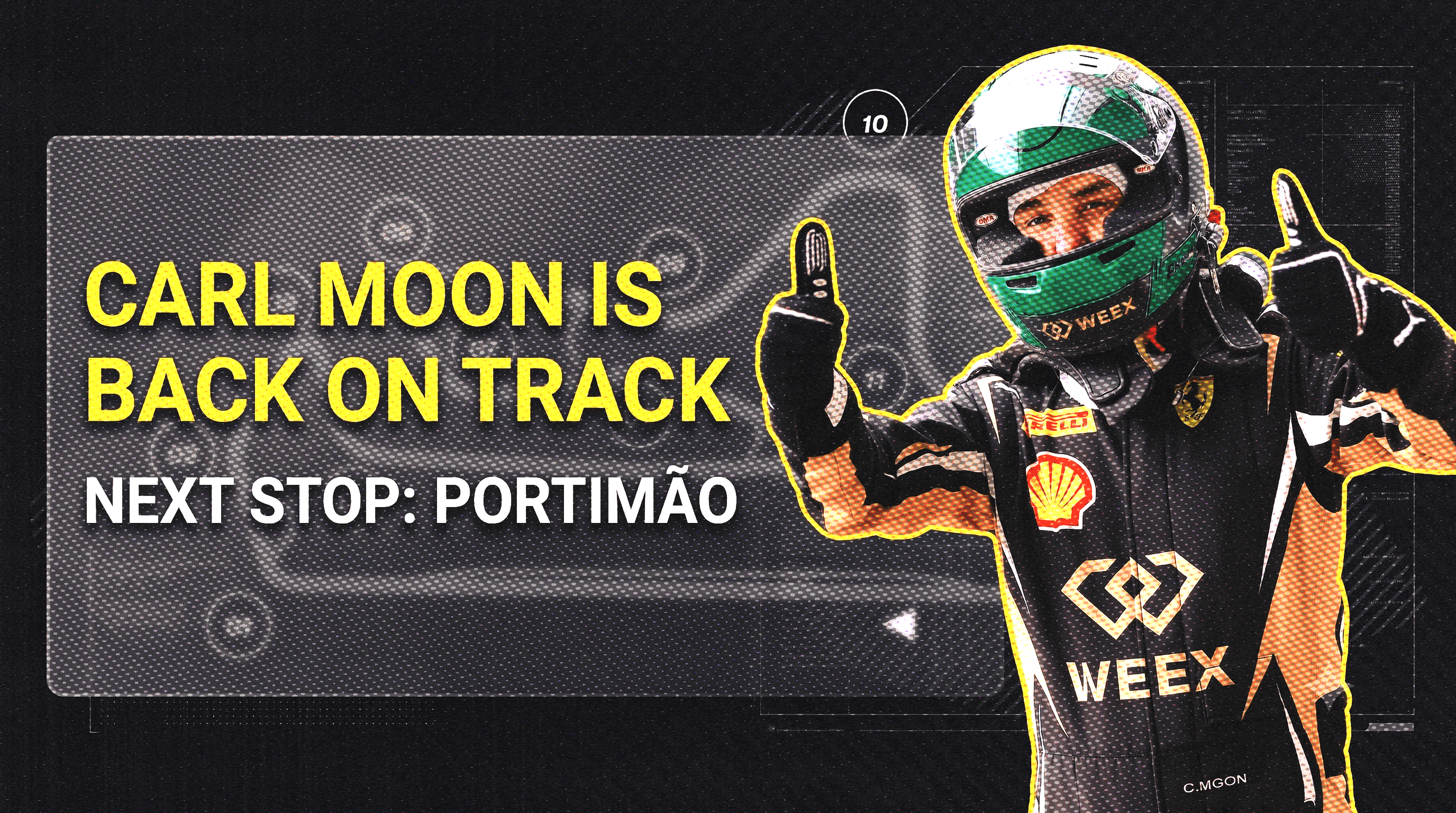
From Le Mans to the Rollercoaster: Carl Moon Takes On Portimão
Crypto world renowned KOL and racing driver Carl Moon, backed by WEEX, heads to the Ferrari Challenge Portugal round at the Algarve International Circuit, July 16–19, fresh off a podium finish at Le Mans. Here's why this race is one to watch.
Fast execution. Split-second accuracy. Security that never blinks. That's WEEX — and that's exactly how Carl races.

The Downfall of a Public Company: A $1.46 Billion Bet on WLFI, $540 Million Went to the Trump Family
Dragonfly Partner: BTC is Intergenerational Wealth, Optimistic About ETH and SOL
Goldman Sachs Calls to Go Long on Chinese AI: $4 Trillion Market Value Behind, Global Funds Only Allocated 1.2%
Home Robot NEO Grows "Dexterous Hands": How Do Hands Become the API to the Physical World?
What is SCEX? The Cryptocurrency Exchange for Vietnam's Market by Sacombank
Major Update for ChatGPT: Cross-Platform Functionality, One-Click Website Creation, and Lower Costs
BTC Challenges 64,000 After Breaking 63,000, Market Trading 'Manageable Risks'
As the Bubble Bursts, Who Dominates Attention in the AI Era? A 2026 Guide to Influential AI KOLs in China and the UK
Old Money in Crypto Shifts: Paradigm Raises $1.2 Billion, Half Bet on AI and Robotics
Contents
Latest articles


Latest coin listings on WEEX


