
Crypto Sherlock: How to Verify Charitable Crypto Wallets and Avoid Scams

Every year, more charitable foundations and initiatives are adopting cryptocurrency as a convenient, accessible, and fast way to receive donations. Crypto offers unprecedented freedom—you can help from thousands of kilometers away without excessive bureaucracy or transaction fees. However, this freedom comes with risks: the anonymity of cryptocurrencies creates opportunities for scammers to set up fake wallets, collecting money under the guise of people in need.
Malicious actors are most active during social crises: war, natural disasters, or high-profile tragedies are peak times for the spread of fraudulent fundraising campaigns. It is worth noting that dishonest activity undermines trust in charity as a whole and scares off potential donors who fear becoming victims of fraud.
How do scammers operate?
Scammers carefully plan their communications. Here are the most common fraudulent schemes:
Cloning accounts and websites: Malicious actors impersonate well-known charitable organizations by copying their design in detail, creating nearly identical websites with false crypto wallet addresses that often differ by only one letter or character in the domain name.
Spam on social media: Scammers mass-post comments on popular pages, spreading fake addresses while pretending that they need "urgent help."
Staging crisis situations: Scammers invent news about injured or sick children or disasters, supporting their posts with fake photos and tearful pleas for help.
Mass messaging with phishing links, notifications about allegedly urgent fundraisers, or emergency addresses if the foundation's main wallet has been "hacked."
Fake announcements: Scammers duplicate official announcements, changing only the payment details.
Why is lost cryptocurrency practically impossible to recover?
The blockchain has no "central bank," and cryptocurrency transactions are irreversible. If you have sent money to an unknown wallet, you cannot cancel or dispute the transfer. In the event of fraud, you can only rely on a police investigation (which is often ineffective for international wallets) or having the address blocked by analytical services to prevent other users from being deceived.
Extended guide to verifying crypto wallets
1. Address verification
Check not just the first and last characters of the wallet, but the entire address string—scammers swap characters that are easy to confuse (for example, the letter "O" and the digit "0", or the capital letter "l" and the digit "1").
2. Searching for the address on official websites
When you visit a charity's website, pay attention to the SSL certificate (the padlock icon in the browser's address bar).
Genuine foundations always duplicate the wallet on social media with a link specifically to their website, not the other way around.
Check the "Contacts" or "Reports" section: reputable organizations often publish addresses for multiple cryptocurrencies with a detailed description of their purpose.
3. Use multi-level verification
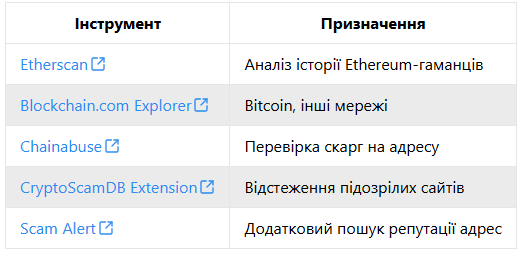
Blockchain Explorer, Etherscan, BTCscan: Check the transaction history. If you see that many small transfers have been made to the wallet, or if the wallet was created only a few days ago, you should be cautious.
Chainabuse, Scam Alert: Enter the address into the search field. Such services aggregate complaints from all over the world. Check if the address appears on open forums and Reddit—sometimes donors themselves warn others about scams.
4. Verify additional information
Charitable foundations are always ready to confirm their addresses upon your request.
Do not download screenshots of addresses from chats. Always enter the address manually or copy it exclusively from a verified resource.
5. Analyze the organization's online activity
If a charity is genuine, it will be mentioned in the media, have annual and financial reports, and have positive reviews online.
6. Analytical services for protection
Install browser extensions (e.g., CryptoScamDB Extension) that automatically analyze and highlight suspicious addresses when entered.
Use official apps from your crypto exchange—such services often have their own blacklists of wallets.
Common donor mistakes and how to avoid them
Emotional decision-making: Before reacting to a tearful post or private message, take an "information pause" and verify the address.
Inattentiveness when entering the address: Scammers swap characters because one or two differences are hard to notice with the naked eye.
Lack of filters in messengers: Set up the necessary protocols so that you do not receive suspicious messages.
Indifference to the organization's reputation: Donating to little-known structures is often risky—it is better to support organizations that have already earned trust and a reputation.
Tips for responsible donors
Use only official resources to find a donation address (no screenshots, chats, or private messages).
Verify the organization's intentions: Serious foundations describe their goals in detail and publish regular reports.
Join communities: Ask questions in the relevant Telegram/Reddit channel—often someone has already checked that same address.
STOP if something makes you suspicious: Doubtful or contradictory information can be a sign of fraud.
Analyze the foundation's history: How long has the organization existed, and what is its image and reputation among other donors?
Extended list of useful tools
Conclusion
Cryptocurrency gives us the opportunity to help without borders or restrictions, but it requires the highest level of caution. Only personal vigilance, address verification, and careful selection of a foundation can guarantee that your donation will actually reach those who need it. Never make donations in a hurry—your attentiveness saves not only funds but also the reputation of the entire honest community.
Do not let scammers ruin good deeds! Before transferring a donation in cryptocurrency, use our guide and share the link to it so that together we can make crypto charity safer. Use this manual as a practical checklist before every crypto donation.
DISCLAIMER WEEX and its affiliates provide digital currency exchange services, including derivatives and margin trading, only where such activity is legal and exclusively to appropriate users. All content is provided for reference only and does not constitute financial advice—seek advice from a financial advisor before trading. Trading cryptocurrencies is high-risk and may result in the loss of your entire investment. By using WEEX services, you accept all associated risks and terms. Always invest only the amount you can afford to lose. Details are available in our Terms of Use and Risk Warning.
Popular coins


